English



During an approximately six-hour field testing program in a Swiss valley, Windtracx operated its WT145 small untethered test drone in both manual and fully autonomous flight modes. The aircraft carried Grepow's next-generation 380 Wh/kg semi-solid-state batteries.
Windtracx summarized the result with a memorable line: "The pilot got tired before the battery did." The team also reported that flight time had stopped being the limiting factor during the day's testing. Public information does not establish that WT145 completed one continuous six-hour flight or used one battery pack for the entire session. (Windtracx on LinkedIn)
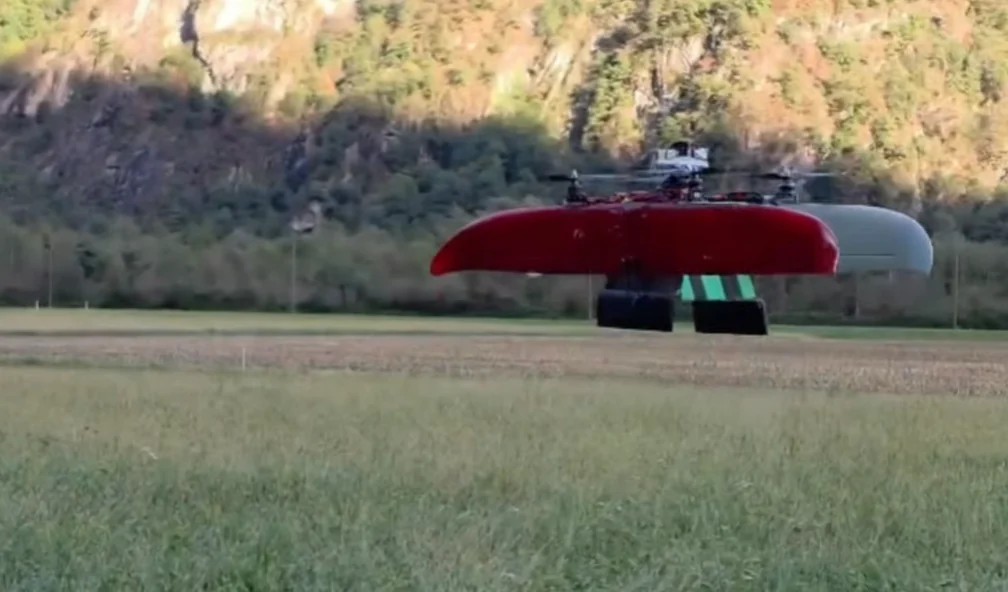
At Grepow, we work with UAV developers that are pushing beyond conventional aircraft configurations. These projects rarely begin with a finished airframe and a fixed battery specification. The aircraft, flight-control software, propulsion system, and power source develop together.
Windtracx is a Swiss deep-tech company developing an autonomous Aero Kite Drone for wind-assisted ship propulsion. Its larger goal is to build an active aerial system that can take off from a vessel, climb to stronger winds at altitude, generate traction through a tether, and return to the ship autonomously.
Before moving toward onboard maritime trials, the team must understand whether its physical aircraft behaves as predicted by its simulation models. WT145 provides a practical platform for that work. The recent field campaign was designed to collect real flight data, compare it with simulated behavior, and refine the control models before the next development stage.
That created a clear battery challenge: the power system had to support meaningful test time without adding unnecessary mass to a small, weight-sensitive aircraft.

Flight testing is not just about keeping an aircraft in the air. Engineers need enough operating time to repeat maneuvers, compare control modes, capture logs, investigate unexpected behavior, and make useful comparisons with simulation results.
Windtracx tested WT145 under manual control with Federico Piccardo and in a fully autonomous mode supported by control work from Lorenzo Garbani Marcantini. Running both modes gave the team more than a simple flight demonstration. It created two operating conditions that could be evaluated against the aircraft model.
If a battery forces frequent interruptions, engineers may collect fewer complete flight sequences during a test day. They also spend more time landing, changing packs, checking the aircraft, and preparing the next sortie. A power solution that provides greater usable energy within an acceptable weight envelope can give the team more room to focus on the aircraft and its data.
Battery selection cannot be reduced to choosing the pack with the highest capacity. Adding capacity normally adds weight, and additional weight can increase the power required for takeoff, climbing, maneuvering, and sustained flight.
Specific energy, measured in watt-hours per kilogram, is therefore a useful starting point for weight-sensitive aircraft. Higher specific energy can provide more nominal energy at the same battery mass or allow a lower battery mass for a given energy target. NASA research also notes that battery specific energy and wind conditions constrain electric-aircraft endurance, while airspeed, altitude, climb profile, and other operating conditions influence state of charge during a mission. (NASA Technical Reports Server)
The practical question is not simply, "Which battery has the most watt-hours?" It is, Which battery configuration gives this aircraft the best balance of energy, weight, power capability, installation space, and operating margin?
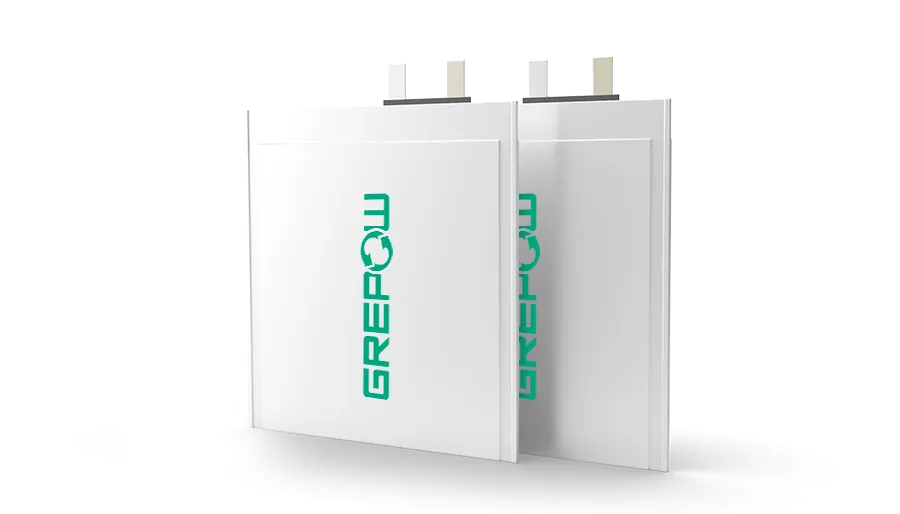
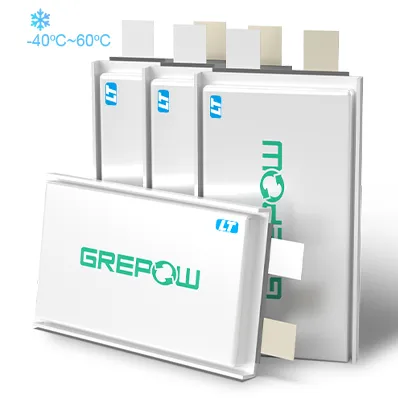
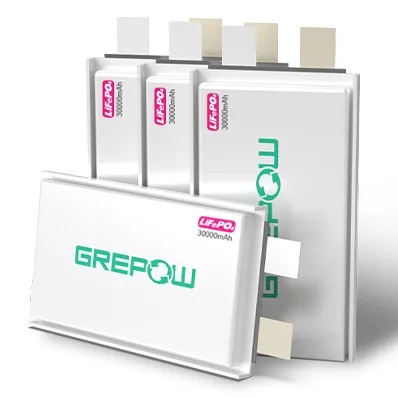
For the WT145 field test, Grepow supplied batteries from our next-generation 380 Wh/kg semi-solid-state technology. The goal was to provide a high-energy solution suited to a small aircraft whose development work depends on useful flight time and manageable system weight.
Our 380 Wh/kg semi-solid-state platform uses high-nickel cathode and silicon-carbon anode technology. It is designed for UAV applications that need to carry more energy without allowing battery mass and volume to dominate the aircraft design.
Grepow can configure this battery technology across different capacities, voltages, dimensions, and connector options. That flexibility matters because an experimental aircraft may have strict limits for battery-bay geometry, center of gravity, cable routing, peak power, and total takeoff mass. (Grepow 380 Wh/kg Semi-Solid-State Battery Series)
For a development platform, extra energy margin can support longer sorties, more test repetitions, or a more conservative landing reserve. The exact benefit depends on the final pack and aircraft configuration.
Energy density alone cannot predict a drone's endurance. Propeller efficiency, motor selection, aircraft drag, takeoff weight, payload, wind, temperature, flight path, reserve requirements, and control behavior all affect how long the aircraft can remain airborne.
This is why we do not interpret the six-hour test program as a six-hour single-flight endurance result. We also do not claim that one Grepow battery powered every flight during the session. Those conclusions would require sortie-level logs, pack configuration data, state-of-charge records, and confirmation from the Windtracx engineering team.
The stronger and more defensible result is that Windtracx completed an extended day of manual and autonomous flight testing and reported that flight time was no longer the limiting factor.
This campaign offers useful evidence without needing to turn it into an exaggerated endurance record. It shows how a high-specific-energy battery can support real aircraft development under field conditions.
WT145 flew in two control modes. Manual flights allowed an experienced pilot to operate the aircraft directly, while autonomous flights exercised the control system that will be central to Windtracx's future product.
That distinction is important. An autonomous aircraft must do more than remain airborne. It must follow commands, respond to changing conditions, operate its propulsion and control surfaces, and produce logs that engineers can compare with expected behavior.
Windtracx plans to review each flight log, compare actual aircraft behavior with its simulation, and refine the model. This is the less visible part of UAV development, but it is often where the most valuable engineering progress occurs.
Research on fixed-wing UAV battery models shows why measured flight data matters: experimentally validated models can closely estimate battery terminal voltage across most of the usable state-of-charge range, improving the connection between simulation and real operation. (Energies: Li-Po Battery Models for Fixed-Wing UAVs)
The battery's role is to support this process with a power source suited to the aircraft's weight and energy requirements. The result is not just more time in the air. It is a better opportunity to collect complete, comparable data.
WT145 is a small untethered test aircraft, not the final shipboard system. Its field results should therefore be understood as one development step in a much larger engineering program.
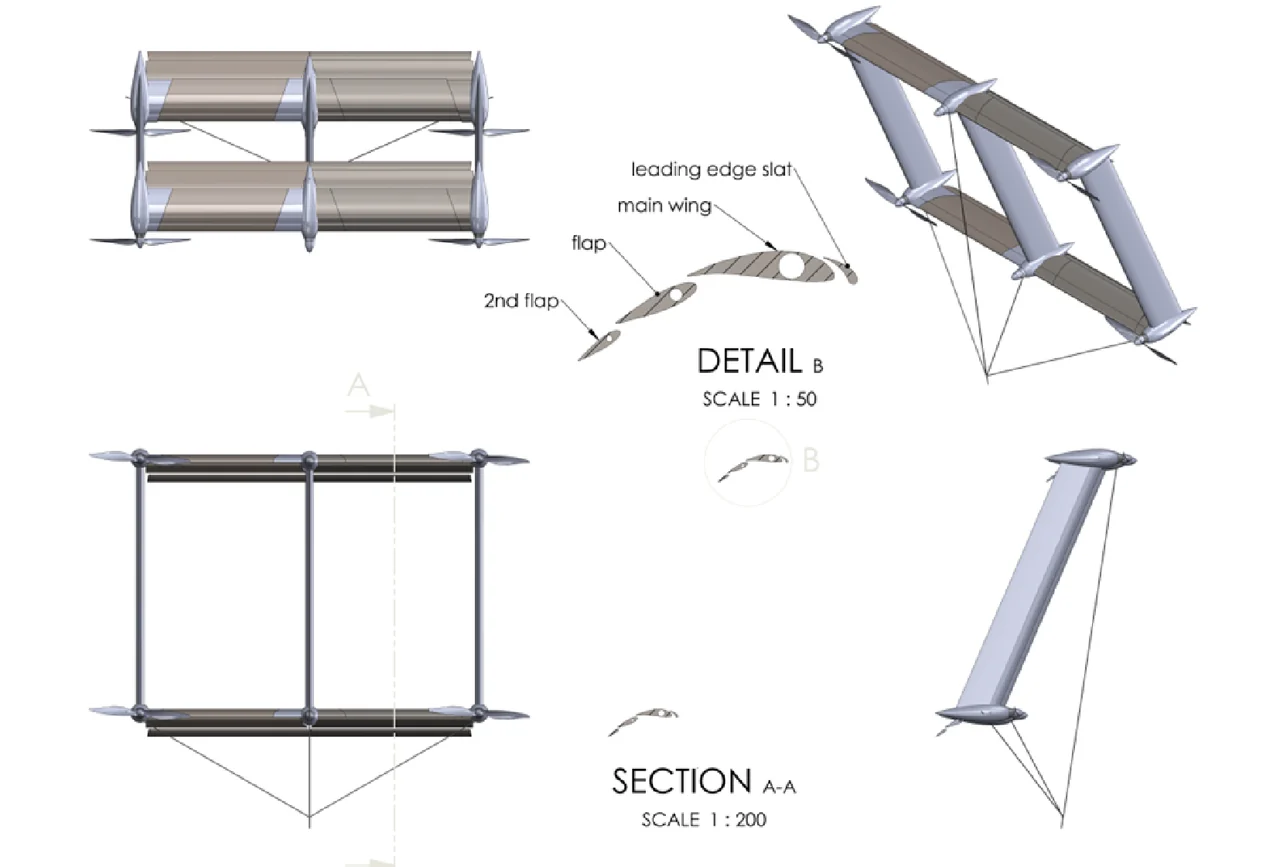
Windtracx's Aero Kite Drone concept combines a rigid biplane structure, electric motors, sensors, autonomous control, and a Dyneema tether. The active propulsion system is intended to support deployment even when wind near the water is insufficient for a passive kite to launch. The company's development roadmap includes autonomous takeoff, tethered operation at altitude, recovery, and landing on a vessel. (Windtracx Technology)
Battery requirements may change as the project moves from an untethered prototype to a tethered maritime platform. Future work will need to consider takeoff power, emergency recovery, redundancy, salt exposure, temperature, charging strategy, duty cycle, and the relationship between onboard energy storage and any in-flight energy recovery.

The application also sits within a broader maritime transition. The International Maritime Organization identifies kites, rigid wings, rotors, soft sails, and other wind technologies as potential contributors to shipping decarbonization. It also emphasizes standardized assessment and transparent performance reporting. That's exactly why measured flight data and clearly stated test conditions matter. (International Maritime Organization)
The recent WT145 test did not validate ship fuel savings or offshore performance. It helped Windtracx move closer to the point where those questions can be tested responsibly.
At Grepow, we approach an experimental UAV as a system-integration project rather than a request for an off-the-shelf battery with the largest available capacity.
Our process can include cell selection, pack configuration, mechanical evaluation, connector selection, prototype production, and engineering review after initial testing. Flight data can then show whether the first design met its voltage, thermal, current, and usable-energy targets.
The pack should be refined around the mission profile, not selected from a single headline specification. A long-endurance fixed-wing UAV may prioritize specific energy, while a heavy-lift multirotor may require a different balance between energy and peak power. An autonomous research aircraft may place additional value on stable output, repeatable behavior, and clear state-of-charge margins.
The next level of evidence should connect the battery specification to sortie-level results. Useful data would include pack model and configuration, battery mass, number of flights, duration of each sortie, starting and ending state of charge, minimum voltage, average and peak current, temperature, wind conditions, recharge time, and remaining landing reserve.
A baseline comparison would make the results even more useful. If Windtracx records the same aircraft, mission profile, and environmental conditions with another battery configuration, the team can distinguish the contribution of battery mass and energy from changes in flight control or aerodynamics.
That is the type of evidence we want to build with UAV developers: transparent, repeatable, and tied to the complete aircraft.
The Windtracx WT145 field campaign shows what high-specific-energy batteries can contribute to an active UAV development program. Grepow's 380 Wh/kg semi-solid-state technology supported manual and fully autonomous testing during an approximately six-hour field session, while the customer reported that flight time was no longer the limiting factor.
The most important outcome is not an unverified endurance record. It is the engineering opportunity created when the battery gives a development team enough margin to test, collect data, and improve the aircraft.
As Windtracx advances toward tethered and onboard maritime trials, Grepow is ready to support the next stage with battery-cell expertise, configurable pack solutions, and application-focused engineering.
No. The public information describes an approximately six-hour field testing program, not one continuous six-hour flight. It also does not confirm that a single battery pack powered the entire session.
Not automatically. Higher specific energy can improve the available energy-to-weight balance, but actual endurance also depends on aircraft mass, aerodynamics, propulsion efficiency, weather, payload, flight profile, and reserve requirements.
Start with voltage, continuous and peak current, target energy, maximum battery mass, installation space, temperature, flight profile, and landing reserve. Grepow can use these inputs to evaluate an existing configuration or develop a customized pack.
Record sortie duration, state of charge, voltage, current, temperature, power demand, environmental conditions, and remaining landing reserve. Repeat representative missions to confirm consistency before finalizing the mechanical and electrical design.
Yes, subject to technical evaluation and cell availability. We review the complete aircraft requirements so that capacity, weight, pack layout, cabling, connector, and discharge capability work together rather than optimizing one specification in isolation.
We use cookies (and other similar technologies) to collect data to improve your experience. By using our website, you're agreeing to the collection of data as described in our Privacy Policy.